EverBloom: Bridging the Gap in Maternal Mental Health
USER RESEARCH
BEHAVIOURAL DESIGN
CONCEPT COMMUNICATION
CLIENT
SunLife Financial
Role
Lead Product designer
Team size
5 Multi-disciplinary members
Timeline
4 months (2023 - 2024)
Tools
Figma, FigJam, Illustrator
Closing the gender gap in mental health
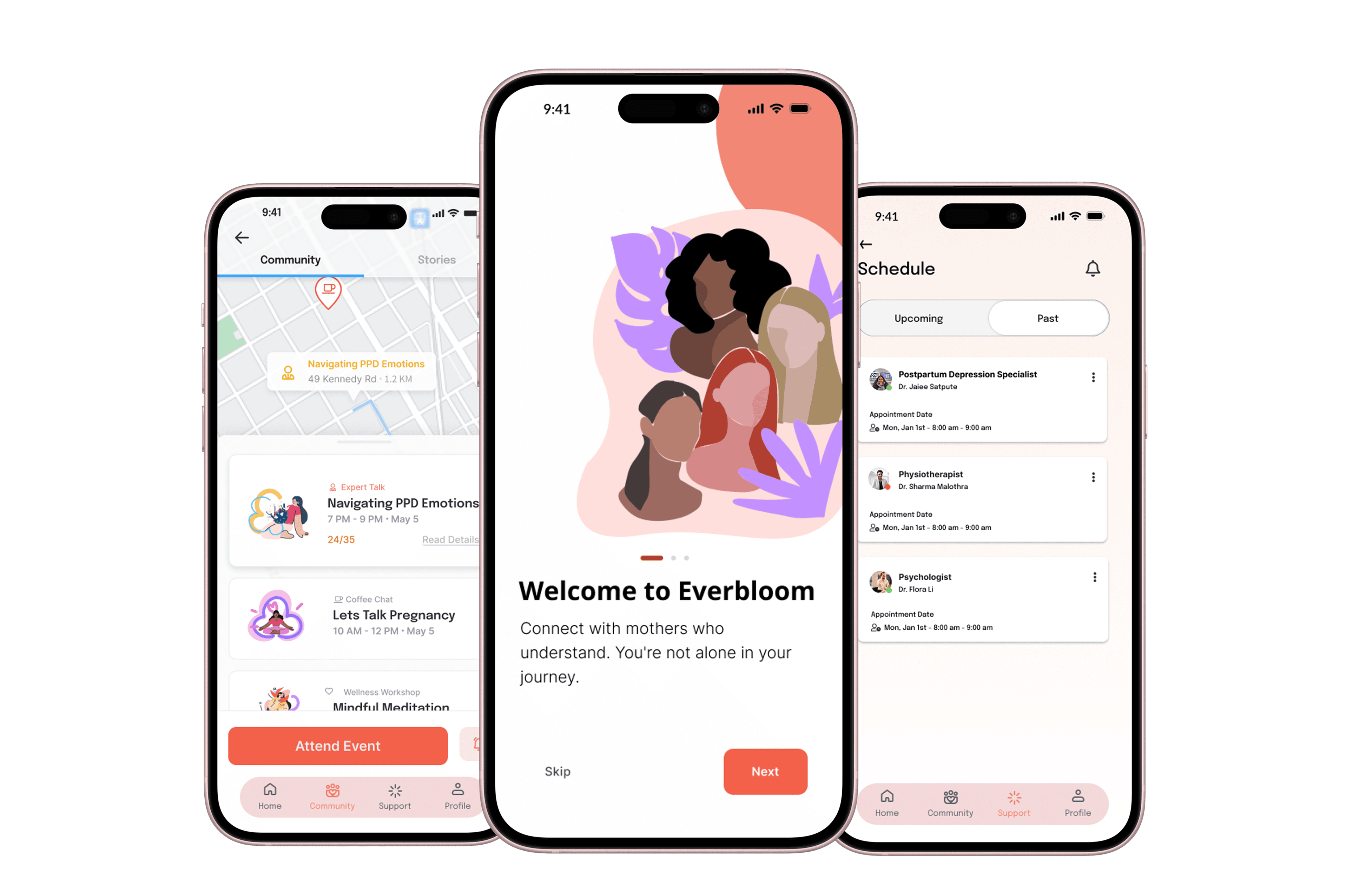
In partnership with SunLife to create a digital solution to close the gender gap in mental health care. Along side with a team of 5, we merged the fields of business, research, and design to create EVERBLOOM, a mobile app designed to support working mothers in Canada navigating postpartum depression (PPD).
My contribution:
My role as a lead product designer was to translate complex psychological needs into a seamless, low-friction digital experience.
Uncovered user needs: Led UX research and "think-aloud" testing with 15 users to pinpoint emotional triggers and usability gaps.
Rapid prototyping: Used Crazy 8's to brainstorm and build wireframes for two distinct app interfaces (mother and support/parner).
Developed design system: Established a calming visual identity, including empathetic color palettes and streamlined navigation.
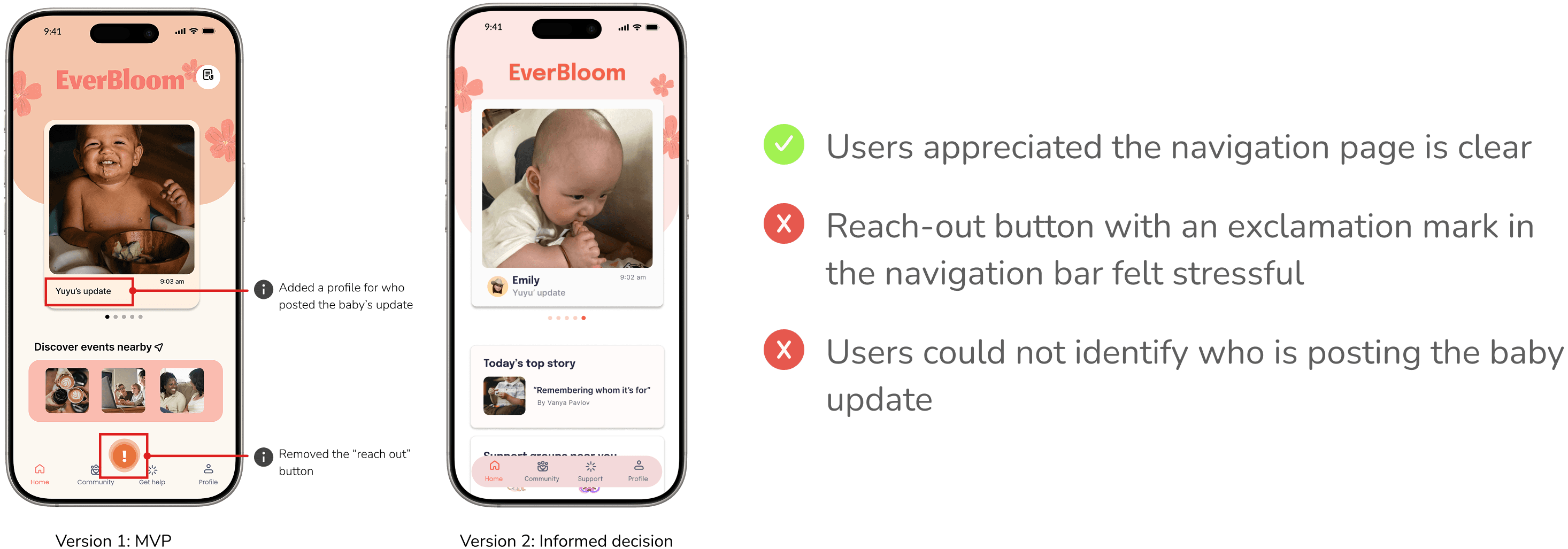
Testing: Validated MVPs, leading to the removal of high-stress features (like the reach-out button) in favor of one-tap prompts.
Stakeholder presentation: Presented data-backed design decisions to Sun Life senior stakeholders
Helping mothers return to work seamlessly
Postpartum Depression (PPD) affects 30% of Canadian mothers. When these moms go back to work, they often feel isolated and overwhelmed. In partnership with SunLife, our team was challenged to create a digital tool that helps these women navigate this difficult transition.
Mother's silent struggle in the workplace..
Insight: High rates of sick leave prove that current workplace support for PPD is insufficient
THE REALITY
48%
of new mothers take sick leaves due to PPD
THE "DOUBLE-SHIFT"
52%
of new working mothers report productivity loss after childbirth
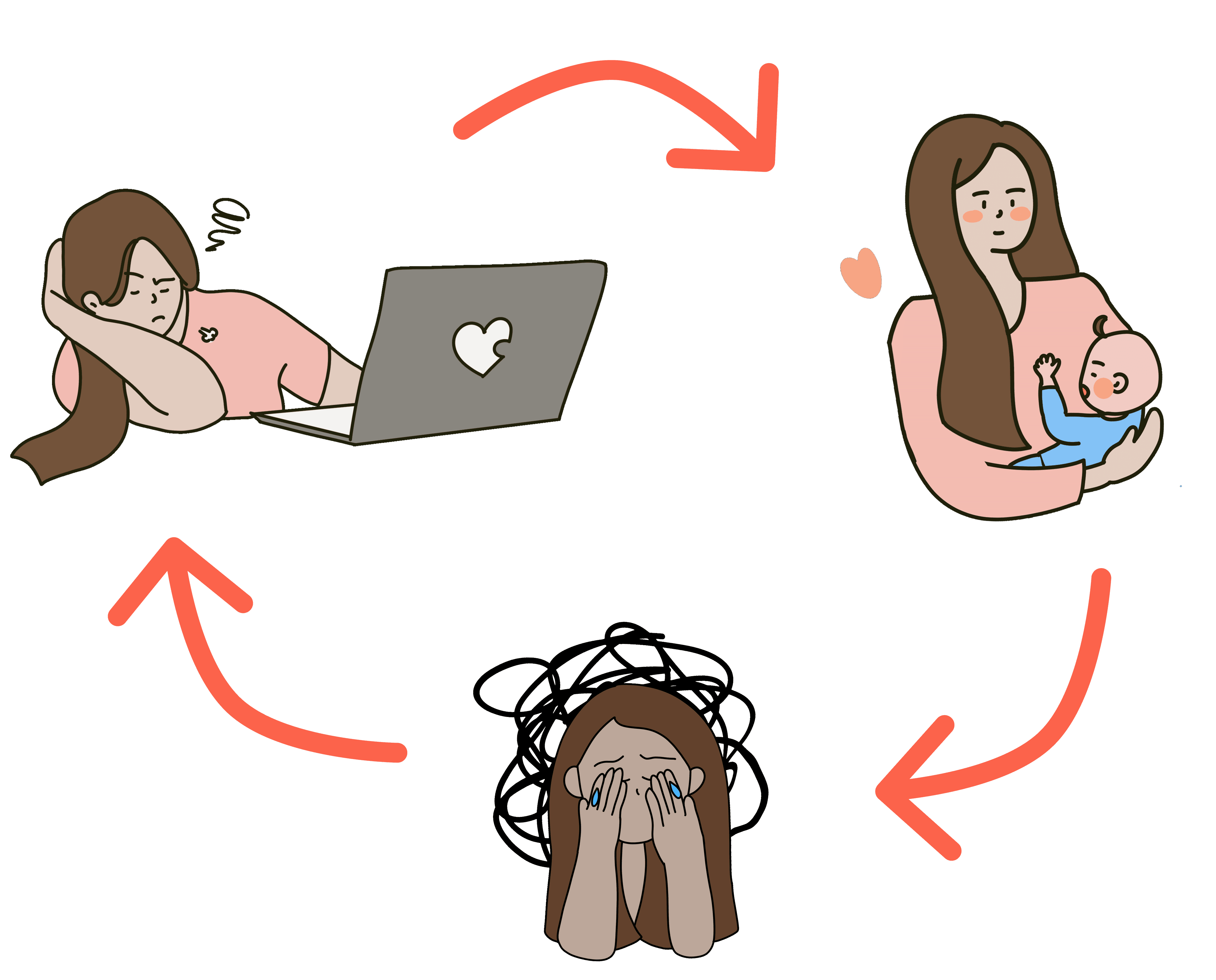
Insight: Productivity loss is often a symptom of the 'Double Shift'—the mental burden of being away from a newborn
The market gap
Apps like Talkspace or Shine are for general stress. They don't help with the specific anxiety of being away from a newborn.
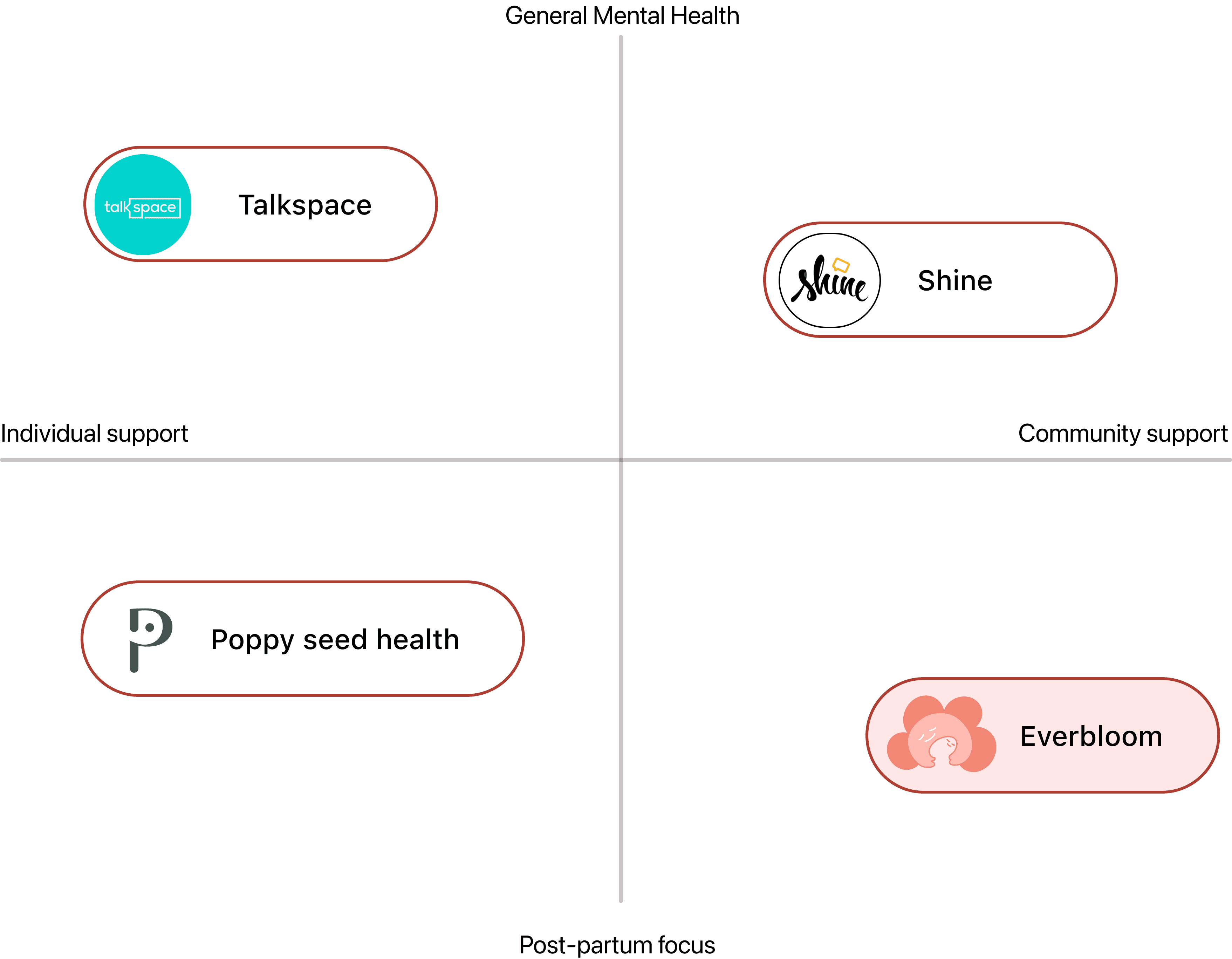
The Gap: Most apps provide general mindfulness but ignore the logistical and emotional needs of a working mother.
So we asked ourselves,
How might we help working mothers who are diagnosed with postpartum depression manage it?

What do working mothers actually need?
I focused on a persona named Layla, a 26-year-old analyst. By mapping her daily routine, I realized her biggest stress wasn't the work itself—it was the disconnection from her baby and the fear that she was "missing out."
“I don’t know where to start looking for help… every site says something different.” - Layla
Key user needs:
A way to feel connected to her baby without checking her phone every 5 minutes.
A safe community where she won't feel "mom-shamed."
Quick access to professional help that fits into a busy work schedule.
Synthesizing findings (mapping out features & user flows)
After defining the persona, my team and I mapped out potential features to decide what EverBloom must, should, and could include. This helped me focus on the essentials, like community support, baby tracking, and access to professional help, while cutting out features that would distract from our core goal of supporting moms with PPD.
The user flow was designed to keep the experience simple and intuitive. Each step reduces friction, ensuring moms can connect and engage without feeling overwhelmed. In this scenario, there are two interfaces, distinct yet connected user flows for moms and their partners/family. Each journey was tailored to reduce friction, encourage engagement, and strengthen support systems
Introducing Everbloom: A dual-interface ecosystem
One of our most strategic decisions was to move beyond a single-user app. We designed two distinct, synced interfaces
The mother's interface: Focused on calm reflection, therapist access, and peer support.
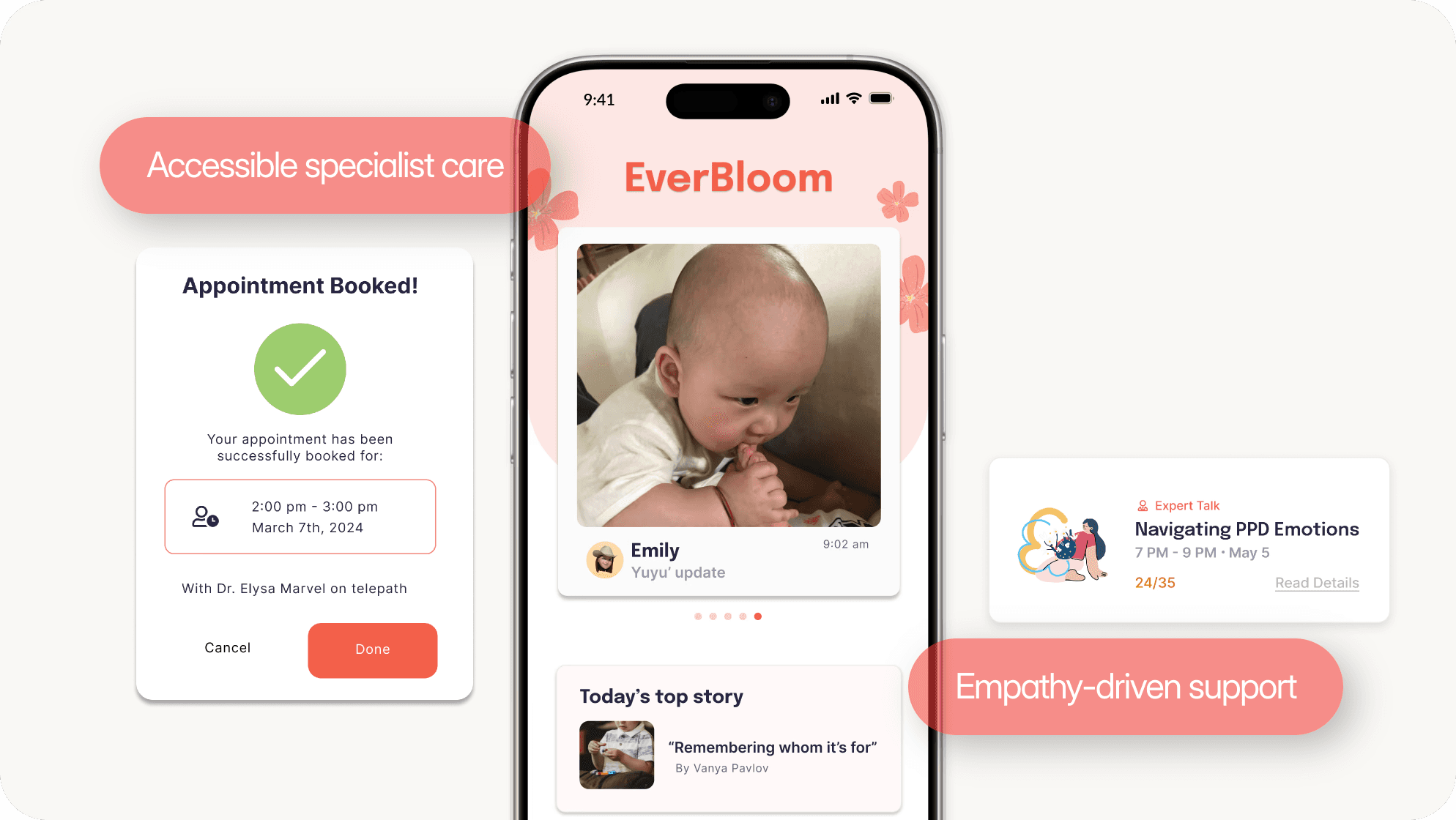
The partner/caregiver's interface: This allows the caregiver to send real-time "baby milestones" (naps, feedings, photos).
Why this works? The mom stays focused at work because she knows her baby is safe, and the partner feels empowered to help.
User testing & feedback
We didn't get it right the first time. I built a minimum viable prototype with my team and tested it with users to see where they got stuck. 11 out of 12 users (mothers & mental health professionals) from Sun Life shared their views on certain features of the MVP.
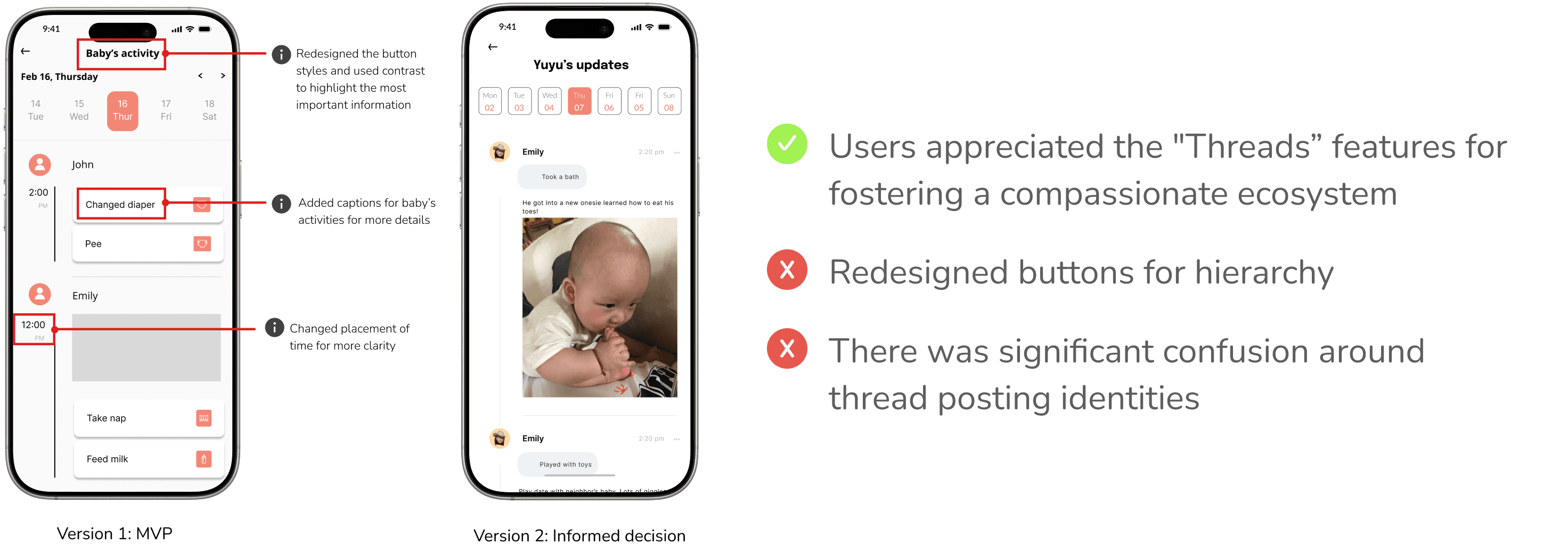
Lo-fi wireframes
After feature mapping and creating a persona, we began with jotting down features & Crazy 8s sketching, generating quick iterations of layouts. The goal was to create simple, modular designs that communicate function instantly.

Developing the design system: a sneak peek
Colors: Warm peaches and soft pinks were used to create a feeling of safety and comfort.
Buttons & icons: Rounded edges and soft visuals were used to keep the experience friendly and easy to use.
The flow: We ensured every important feature was only three taps away, because a stressed mom shouldn't have to hunt for help.
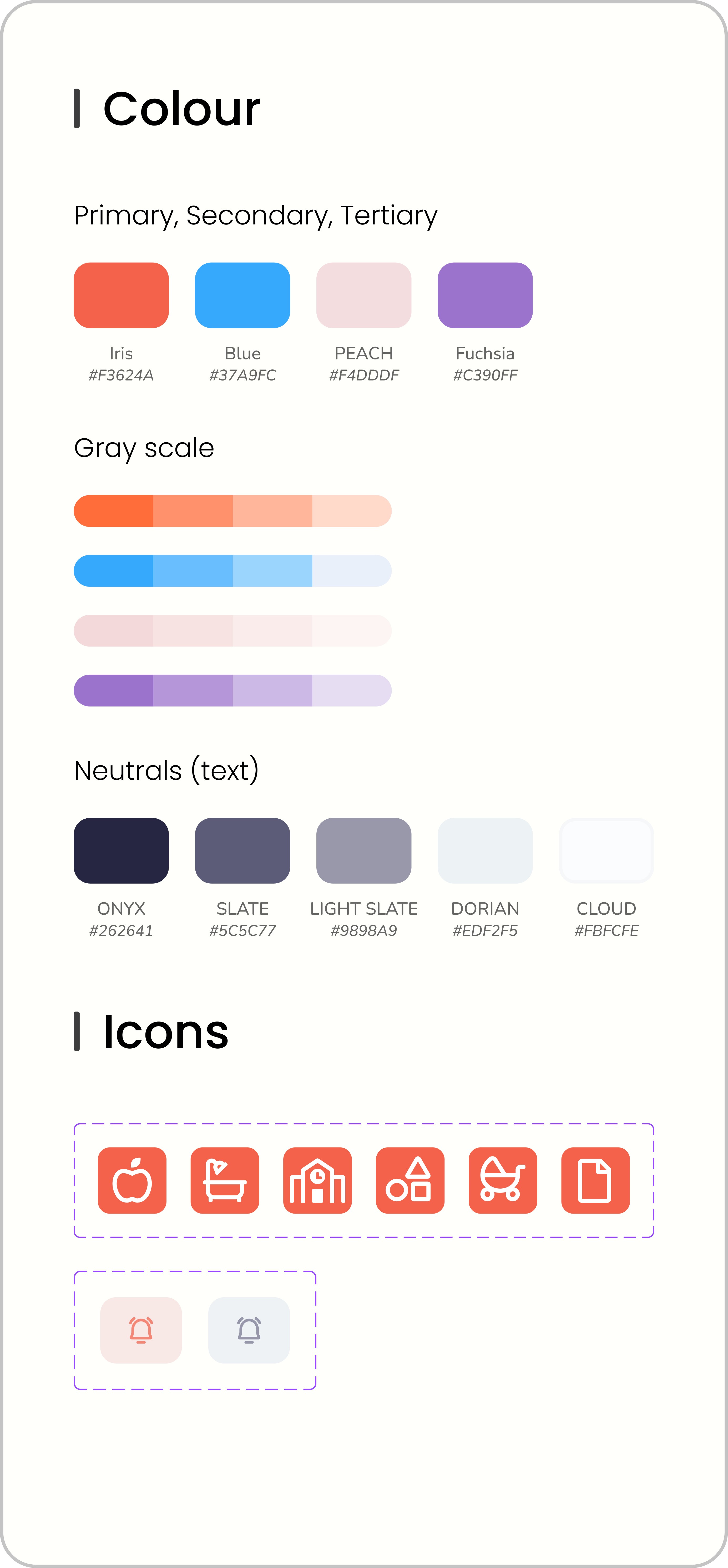
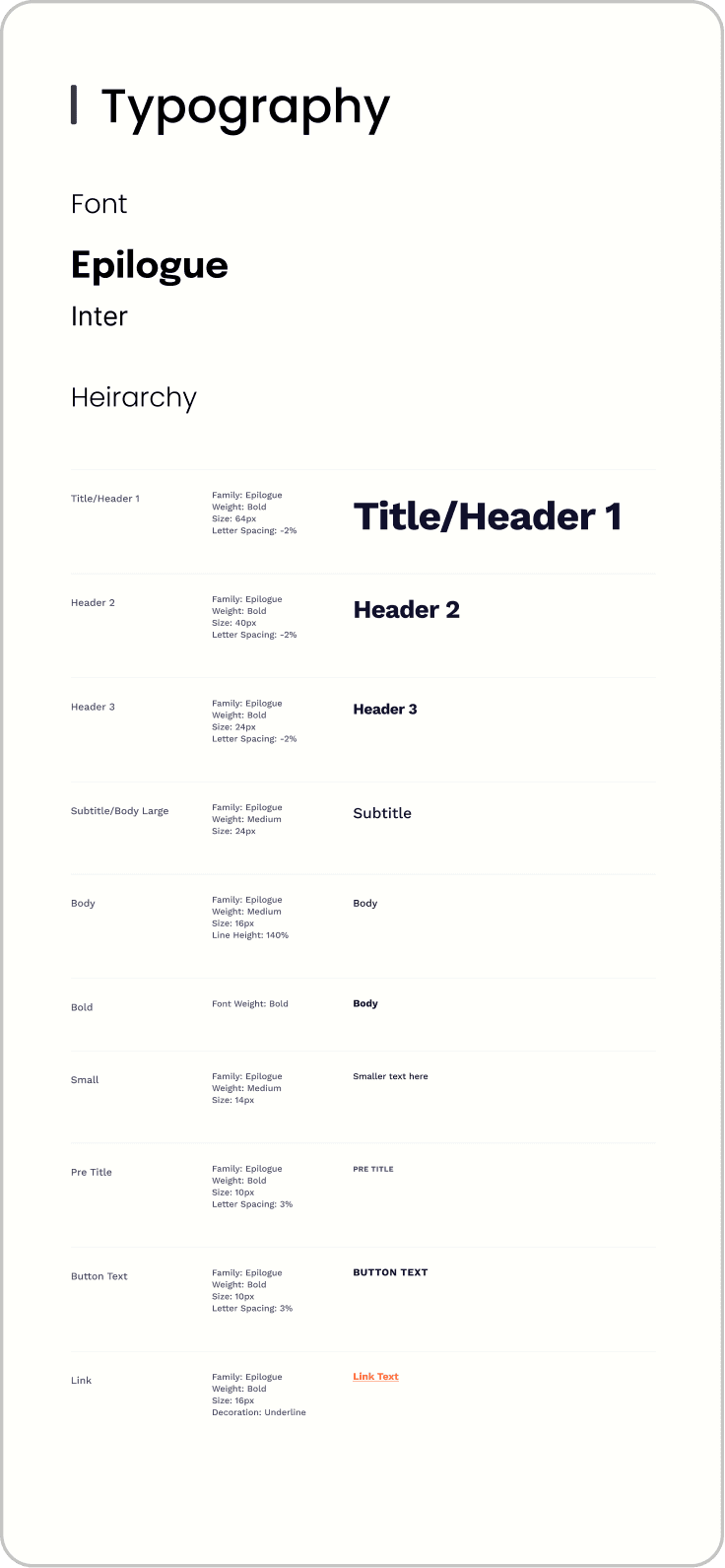
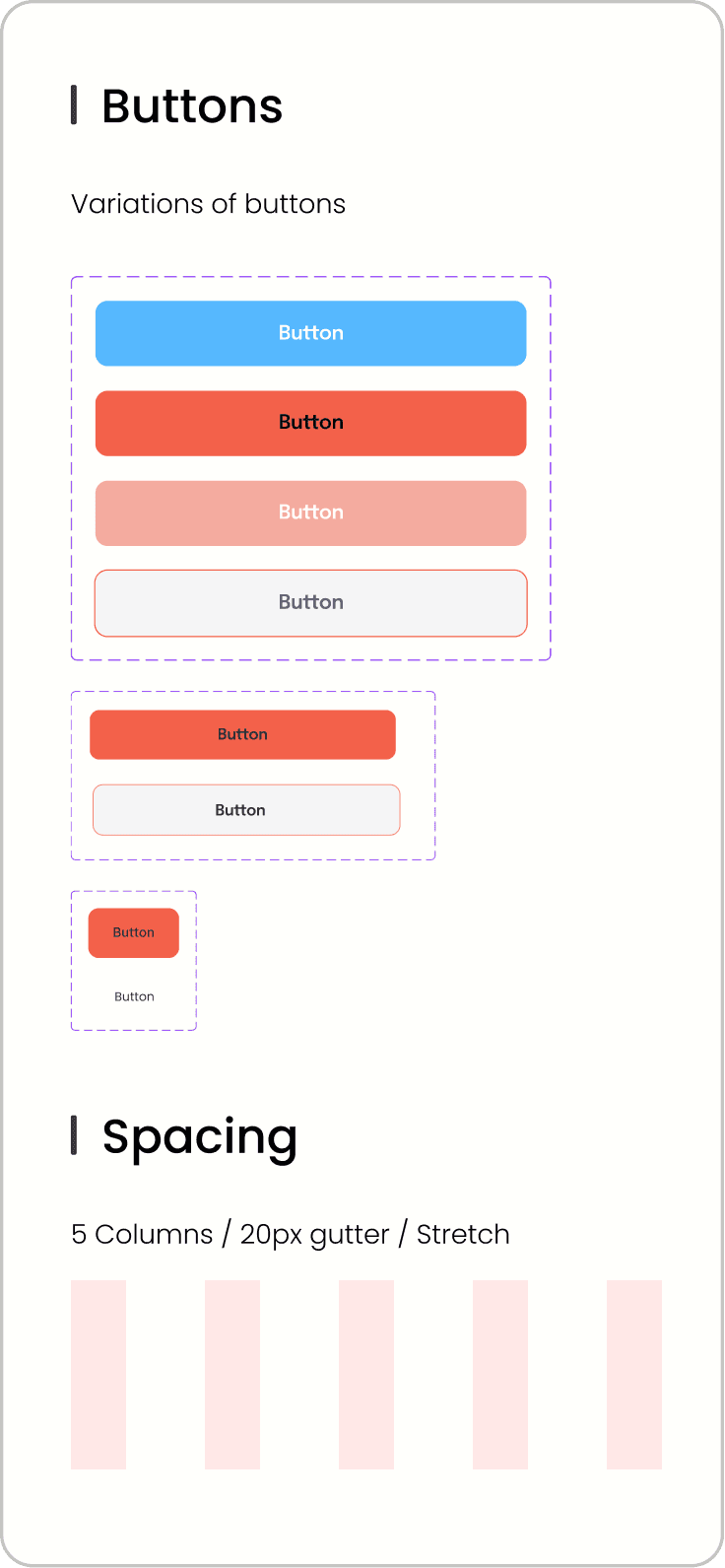
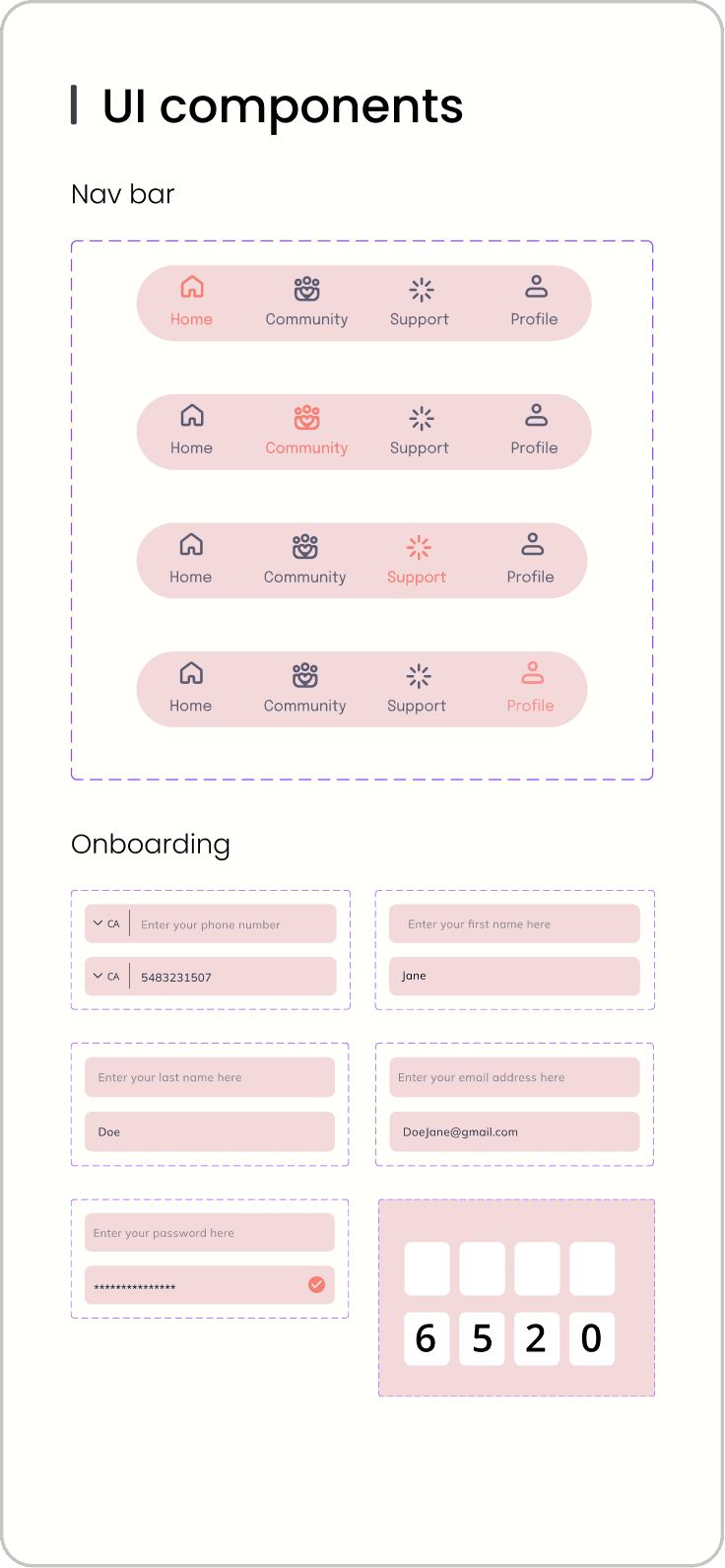
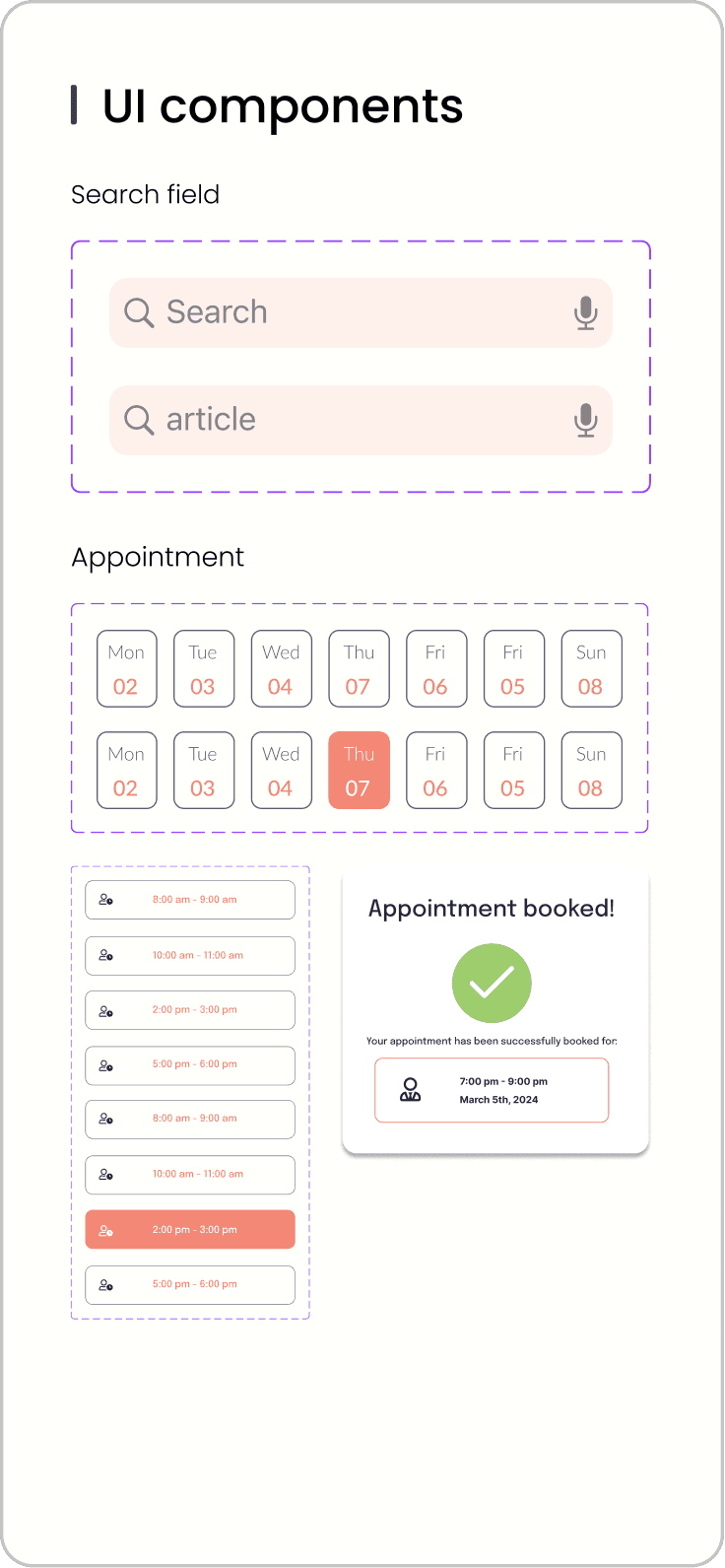
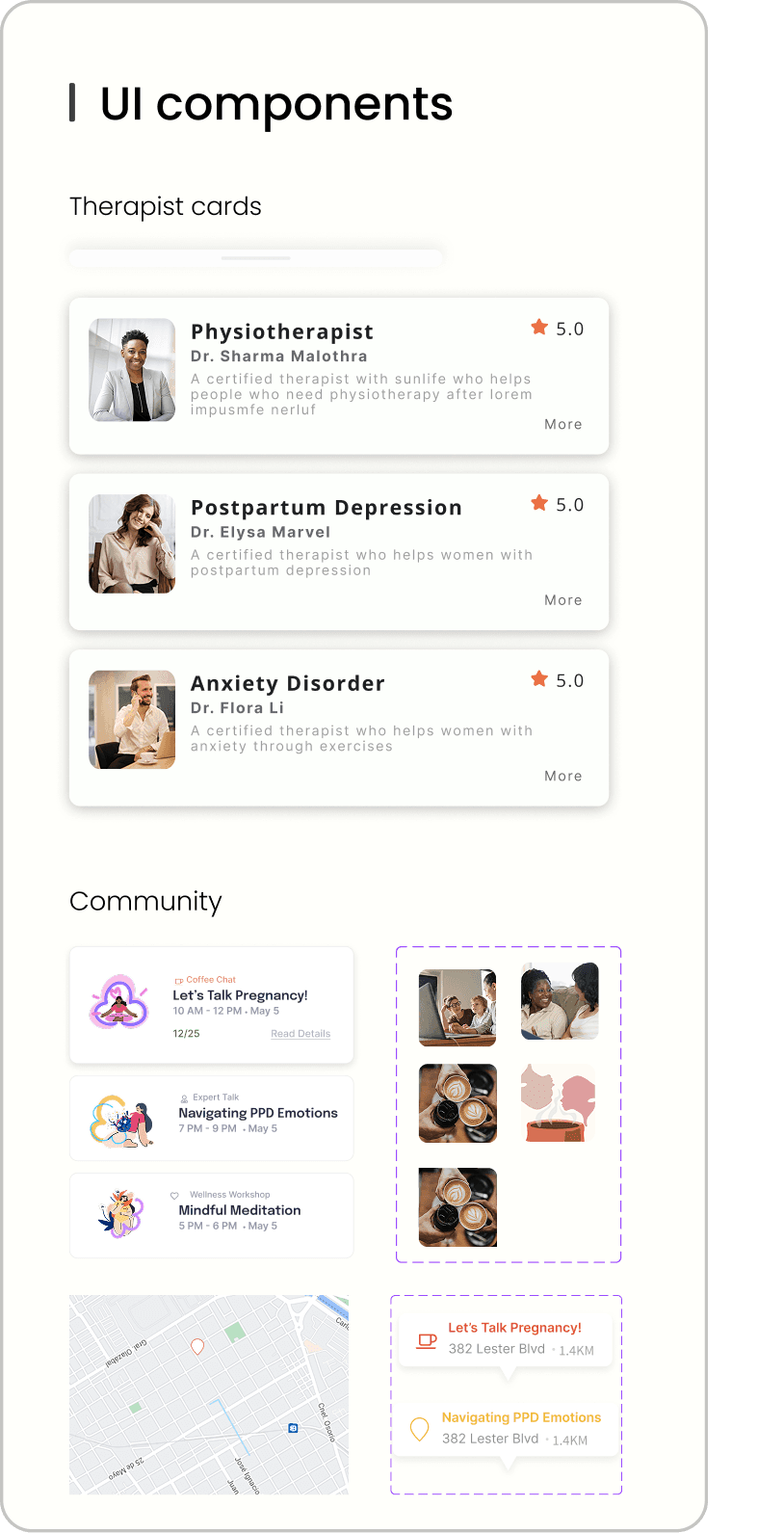
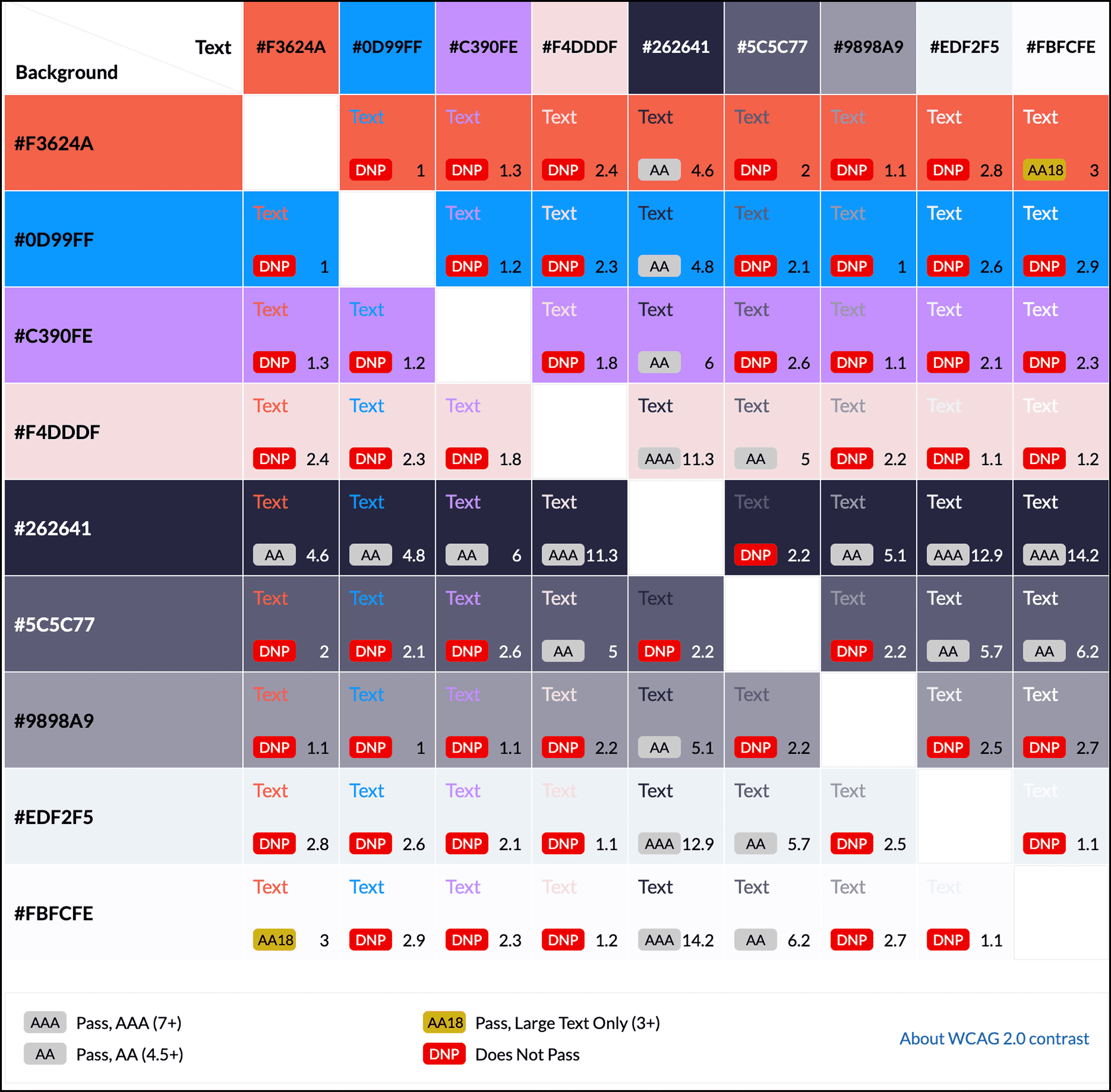
WCAG contrast: Ensured the colors used in the mobile app passed the WCAG contrast check.
Designing for calmness & empathy
Homepage: To combat the 'brain fog' often associated with postpartum recovery, I designed the main interface to provide a centralized, low-friction overview. I stripped away traditional clutter in favor of a curated feed of appointments and recommendations to ensure mothers can navigate their day with ease
Threads page: Let mothers stay connected to their baby while at work, a need that emerged repeatedly during our interviews.
Threads page (caregiver interface): Caregivers can upload photos and updates throughout the day, giving mothers peace of mind and a sense of closeness even during long separations.
Community page: Community spaces were designed to bring mothers together in moments that are often isolating. It highlights local meetups, workshops, and supportive gatherings curated specifically for postpartum mental health. This feature was most loved during user testing.
Scalable revenue model
Everbloom targets a defined, high-need segment: working mothers experiencing postpartum depression, and delivers a scalable, subscription-based digital platform. With a validated $25/month model and a 150K-user break-even point. Backed by Sun Life’s 150+ year legacy, established distribution channels, and trusted healthcare partnerships, Everbloom is positioned as a reliable, infrastructure-supported solution designed for measurable impact and long-term sustainable growth.
What I learned
Presenting to SunLife XD taught me that great design is about business + empathy
Thorough research: "partner sync" idea came because we listened to how lonely moms felt
Simplicity is the key: When a user is stressed, the design must focus on empathy
Next steps
If given more time, we plan to expand EverBloom through:
Desktop Dashboard: for therapists and caregivers to monitor anonymized trends.
integrate AI Insights: analyze reflection data to provide gentle, adaptive support.
Integration with Sun Life Wellness Ecosystem: bridging insurance coverage with everyday mental care.
Special thanks to my team!
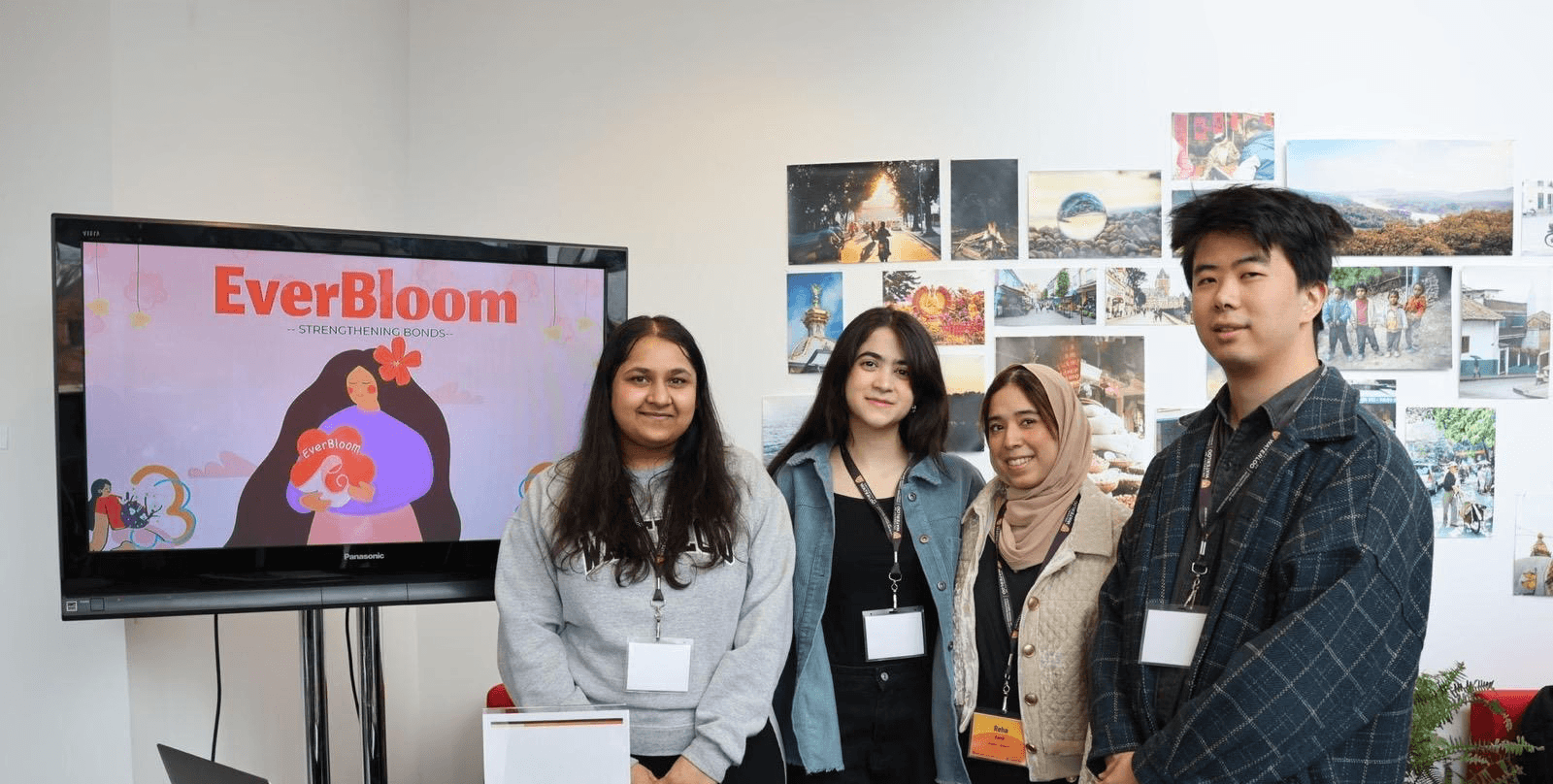
Thank you for reading!